
I get asked a lot whether it is worth spending the money buying an expensive air fryer over a cheap one. Given that these days we do not always know if our appliances will last a long time, it is a genuinely important question.
I have reviewed dozens of air fryers, from supermarket brands to models that cost ten times as much, and in this article I will share some of the key differences between cheap and expensive models, including the one red flag with cheap models that I always watch out for.
Table of Contents
Presets vs Settings
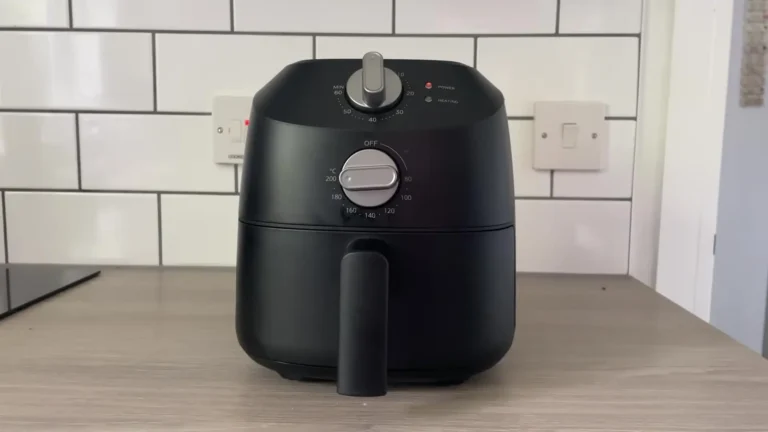
The first difference between cheap and expensive air fryers is presets versus settings. Now they sound similar, but they are not. Cheap air fryers usually have one speed with a range of presets that are simply pre-programmed time and temperature combinations that are roughly right for different food types. These buttons will either have symbols representing food or they will be named after different food types.
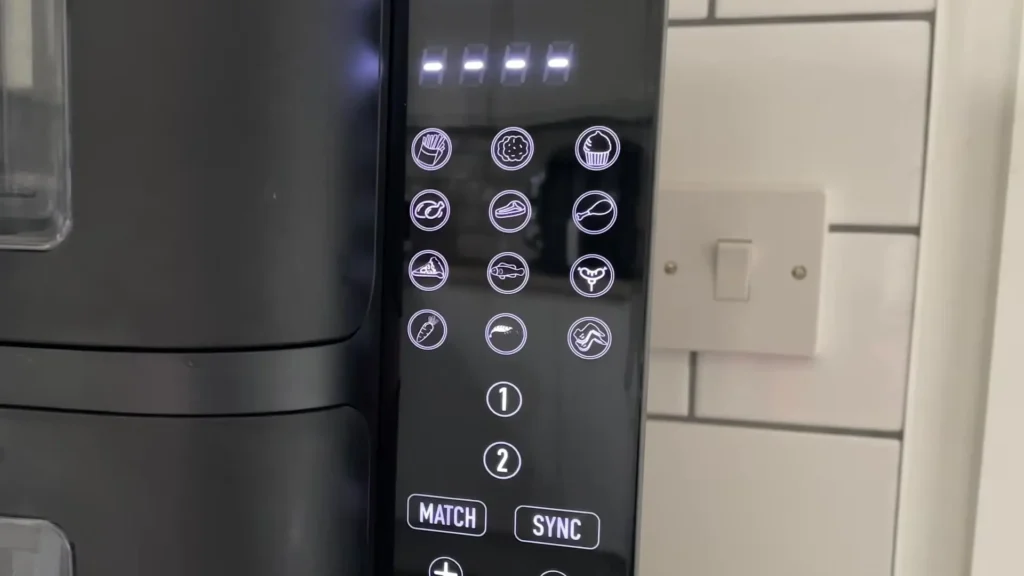
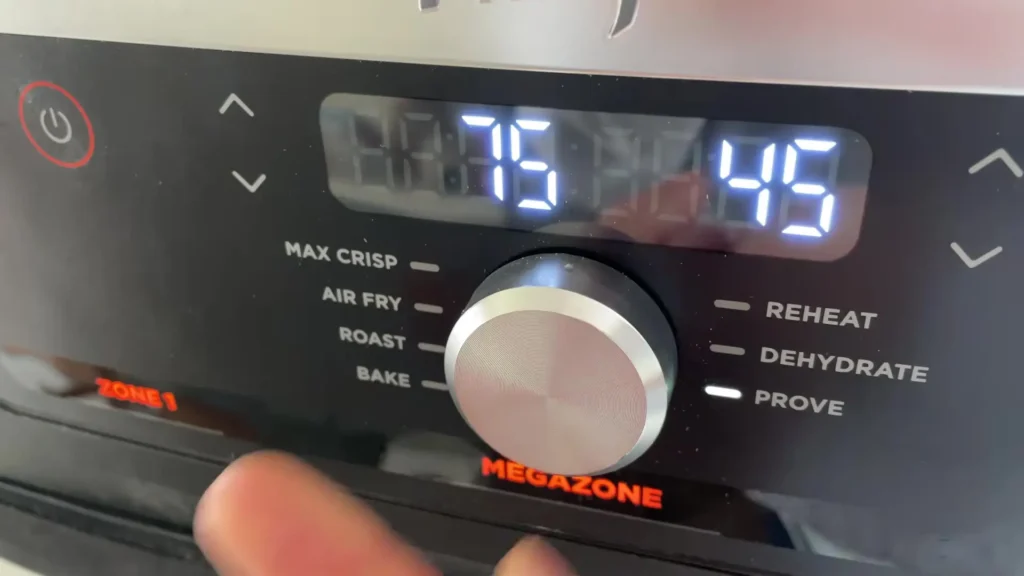
If you spend a little bit more, you tend to get air fryers that have settings, which are buttons named after styles of cooking like dehydrate, roast, and bake. These settings will have different fan speeds, so a lower setting is needed for something like dehydrating foods, and a higher one will give you fast cooking for frozen foods like chips. Different fan speeds make air fryers significantly more versatile, and that versatility is one of the clearest advantages of spending more.
Non-Stick Coatings and Why They Matter
More expensive air fryers generally have better non-stick coatings. This does not just mean that food does not stick to them. It also means they are easier to keep clean, harder to damage, and are arguably often made with safer coatings. To be clear, PFOA, which was the concerning chemical in Teflon, has not been used in production since 2013, and both the World Health Organization and the European Food Safety Authority say that the PTFE material now used is safe.
However, many people prefer to avoid it entirely and choose ceramic non-stick coatings instead. Those are harder to find and generally only used on more expensive air fryers.
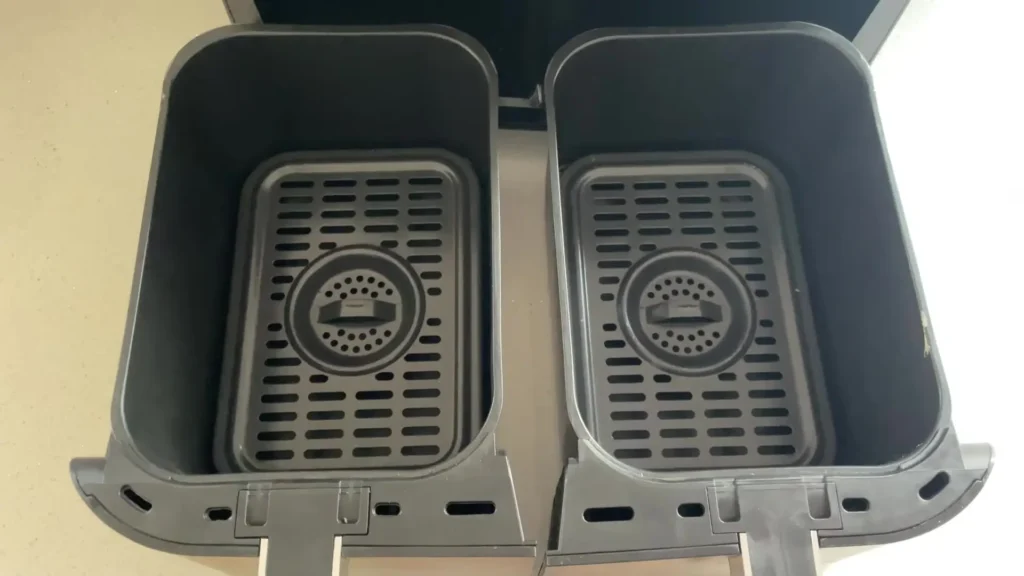
It is also worth noting that some manufacturers either do not publish what their non-stick coatings are made of or sometimes seem to not even know themselves. I always inquire when I am reviewing air fryers if it is not listed in the product information, and sometimes with the cheaper ones I never actually get a reply.
Manufacturing Quality and the Red Flag to Watch For
In my experience, manufacturers of premium priced air fryers generally have a little bit more control over the manufacturing process. They start by creating a design in-house, usually something their marketing team has identified as a gap in the market, and then they find a manufacturer to make it to their specifications. It goes through an extensive process of research and development, going back and forth to the factory until they have a version that is perfected, and then it is released for sale.
Some of the cheaper air fryers, on the other hand, appear to be made by factories overseas and then badged up by a brand and sold as part of their range without the brand having much involvement, if any, in the production process. The biggest clue as to whether an air fryer has been through a proper period of research and development is the plus and minus buttons. In the UK,
We expect minus to be on the left and plus to be on the right, or down to be on the left and up to be on the right. When I see that reversed on an air fryer, that is a red flag to me and a strong indication that the appliance probably has not been through much product development at all.
Do Cheap Air Fryers Cook as Well?
Unfortunately, in my experience testing them, they often do not. Some cheaper models run slow and take longer to cook, and if the fan is underpowered it can result in uneven browning of your food. So although most people buy air fryers to save time and money, if you get a cheap one it may actually take longer to cook your food than the traditional oven you were using before.
Cooking time is only one of the factors you need to consider if time saving is important to you. Some budget air fryers do not have dishwasher safe parts, and this can be for two reasons. They might simply be made of cheaper materials that cannot stand up to the high temperatures and pressure of a dishwasher cleaning cycle, or it can be a cost-saving measure.
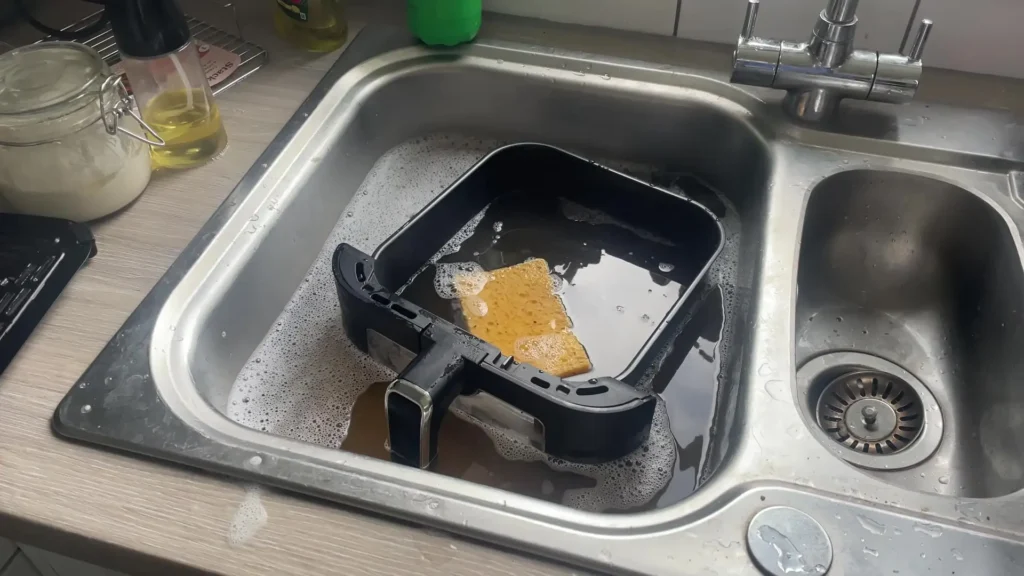
If you are a manufacturer and you want to confirm that your appliance parts are dishwasher safe before putting them on sale, you have to pay for dishwasher testing. Skipping that testing is one way to keep the product cheap.
Safety Features Are Not Standard in All Air Fryers
You may have seen stories in the news recently about air fryers catching fire, and it is something a lot of people are genuinely concerned about. Over the years of testing, I have experienced a couple of air fryers that reached temperatures beyond the maximum you can set them for, and one fairly recently that started having smoke pouring out of it. Safety features are really important, and they are not standard in all air fryers.
More expensive models will have an auto heat shut-off if the unit starts overheating, and personally I think that is really worth paying for. If you are not sure whether the brand you are looking at has an auto shut-off, it should be in the product information. Do ask them directly, because if they have it, they will normally be very keen to tell you about it.


Community, Accessories, and Support
If you buy an air fryer from a leading brand, you will also find there tend to be more third-party accessories available that fit that specific model, along with bigger support groups on social media. These products also tend to come with much better instructions and usually a recipe book as well.
If you are new to owning an air fryer, it is so much easier to buy one that means you are instantly part of an established community. When you are trying out recipes, you are far less likely to waste food if you can find a recipe already being cooked in your exact model by somebody else.
Build Quality & Insulation
Build quality matters when you are choosing an appliance, not just because better-built models should hopefully last longer, but because ones made with higher grade materials are likely to be better insulated, which will in turn make them cheaper to run.
Many air fryers I have reviewed become quite hot to the touch on the outside after running for a few minutes. But some are so well insulated that they only feel slightly warm on the outside even after extended use, meaning all that heat and energy you are putting in is staying inside the oven where it belongs.
Running Costs
Customer support is usually something you pay for with better and more expensive brands. A good way to protect yourself if you do buy a cheaper model is to buy it from a retailer that offers solid support, such as a supermarket where you can go back in person and speak to somebody, or a chain like Lakeland, or of course Amazon.
I get a lot of comments from people talking about consumer rights and how warranties and customer service do not matter because of what the law says. But if you cannot get hold of the company you bought the product from, it is going to be very time consuming and frustrating to exercise those rights. It is simply easier to buy from a company that has decent customer support to begin with.
Wi-Fi Connectivity
One more thing that cheap air fryers generally do not have is Wi-Fi connectivity. I know this is a love-hate topic, and not everybody is going to want it. But a lot of people genuinely love it. They like having an app where they can select a recipe, press a button, and have their air fryer set up automatically with the correct time, temperature, and settings. If that kind of convenience appeals to you, it is something worth factoring into your decision.
Final Thoughts on Expensive Air Fryers
My intention here was not to push you in either direction on the expensive versus cheap debate. I hope this has given you enough knowledge to make a more informed decision about which air fryer is right for you. There are genuine differences between budget and premium models across cooking performance, safety, build quality, coatings, and support, and knowing what those differences are puts you in a much stronger position when it comes to making your choice.
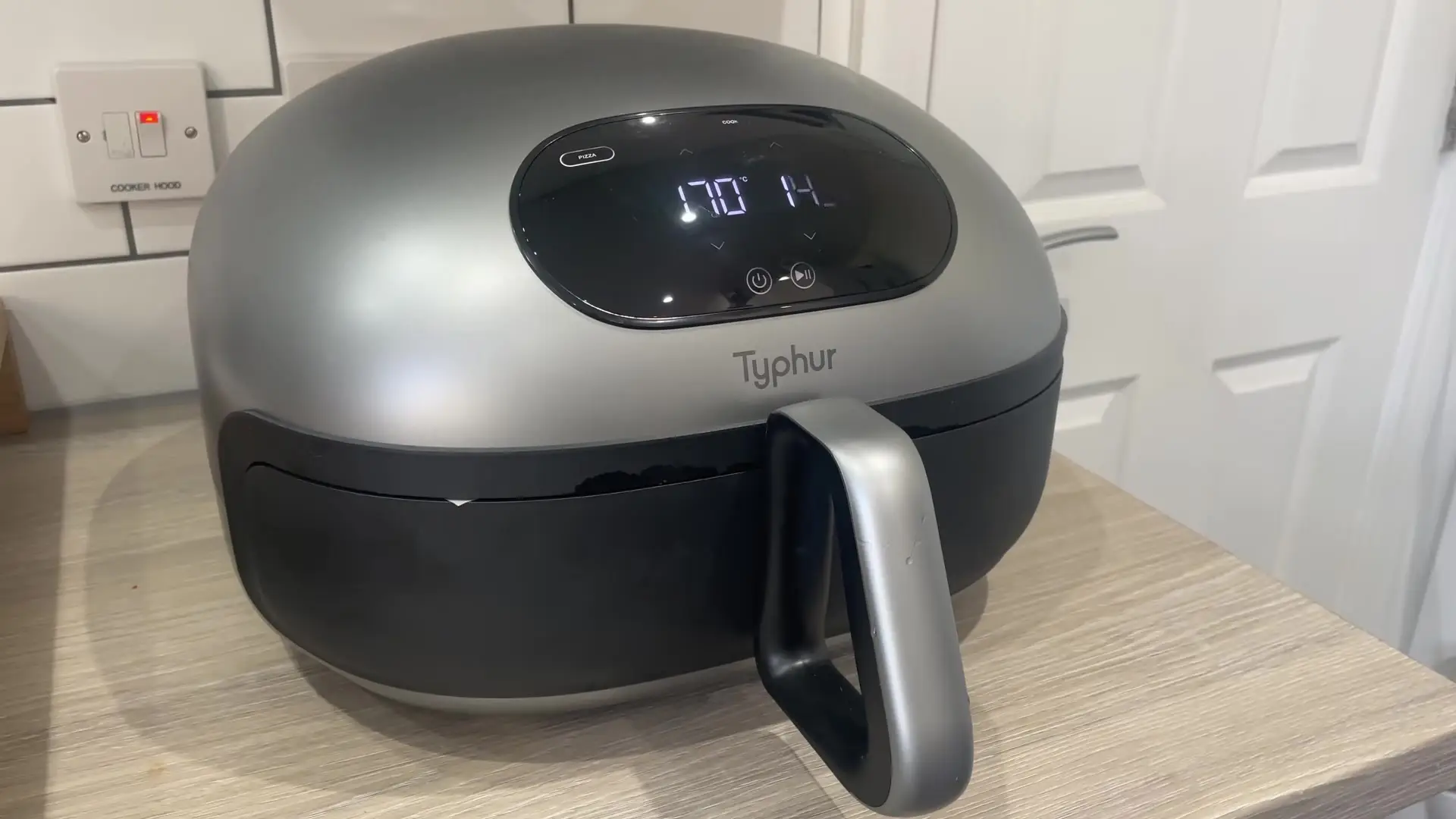
Read More: Typhur Dome 2 Review