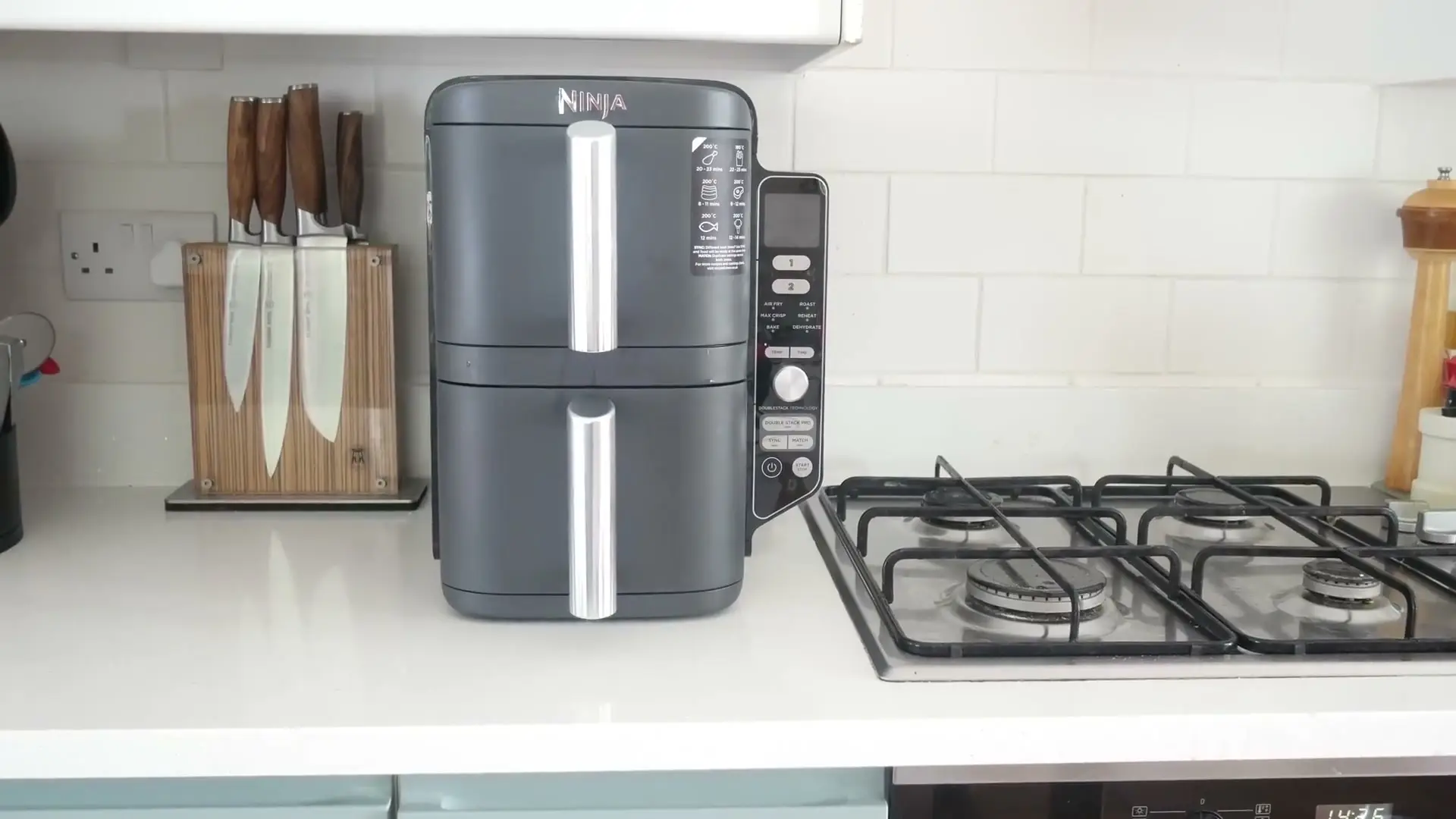

A few year ago, Ninja launched the Double Stack, an air fryer that looked like no other. It promised to fit into small kitchens while delivering the same capacity and performance as larger air fryer models. There was plenty of publicity around the launch, including a pop-up restaurant on London’s South Bank built to look like a giant Double Stack, where visitors could eat food cooked in a real one.
However, when it launched to the public, the Ninja Double Stack attracted some criticism, with certain people claiming it does not cook as well as other air fryer models. In this review, I get to the bottom of those criticisms, walk you through why it is built the way it is, and share several side-by-side cooking tests I carried out in my own kitchen, comparing the Double Stack directly against the Ninja Dual Zone Max.
Table of Contents
Capacity and Drawer Dimensions
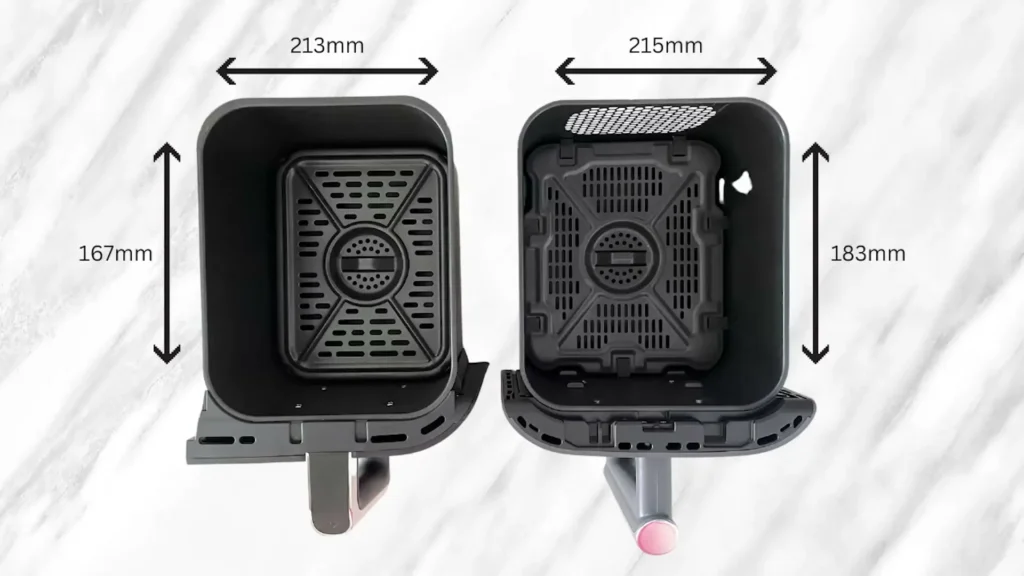
The 9.5-litre capacity of the Ninja Double Stack is identical to the Dual Zone. However, the drawer dimensions are slightly different. The Dual Zone drawers measure 213mm by 167mm, while the Double Stack drawers measure 250mm by 183mm. The most notable difference, though, is drawer depth. The Dual Zone drawer is 14.5cm deep, whereas the Double Stack drawer is just 13cm deep.
Built to Fit Under Kitchen Cabinets
The Ninja Double Stack has clearly been designed to sit on a worktop beneath kitchen cupboards, which is why its drawers are a little shallower. The unit measures approximately 37.5cm in height, and the bottom of my kitchen cabinets sit 41cm from the worktop, so it fits comfortably underneath. Keeping the height low, however, created a couple of design challenges.
First, Ninja could not place the heating elements above the drawers as they did on the Dual Zone, because that would have added too much height. For the same reason, the control panel could not be positioned on top of the unit.
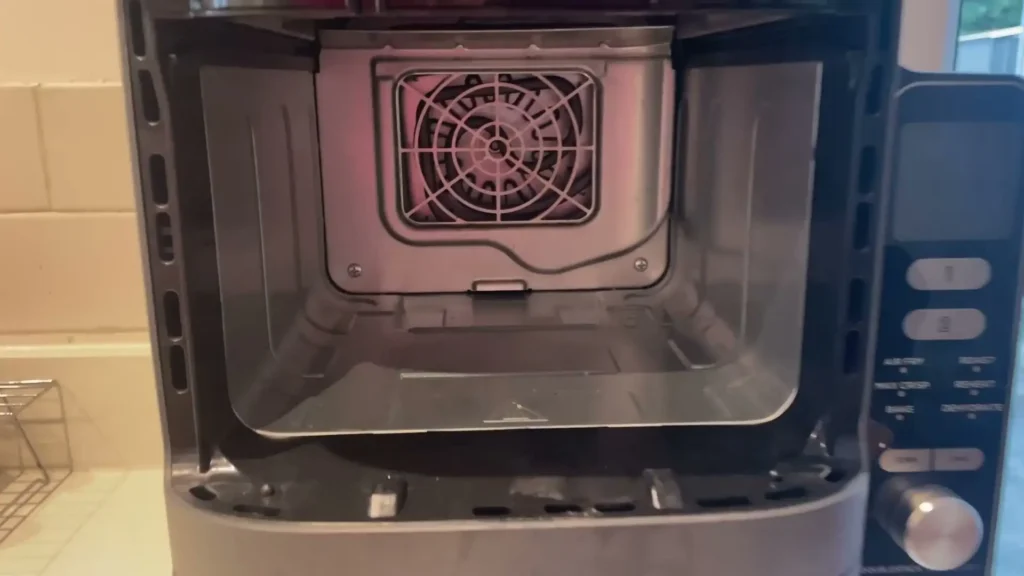
Instead, the heating element sits at the back of the drawers, with vents in the drawers to allow warm air in from the rear. The control panel has been moved to the right-hand side, sitting on a small section that protrudes from the main body.

Depth and Worktop Space
Placing the heating elements at the back means the machine is deeper than a standard air fryer. It measures 47cm from front to back including the handle, and when you factor in worktop upstands and plug sockets, it can use up to 52cm of a 60cm deep worktop. For comparison, the Dual Zone measures around 37cm front to back including the handle.
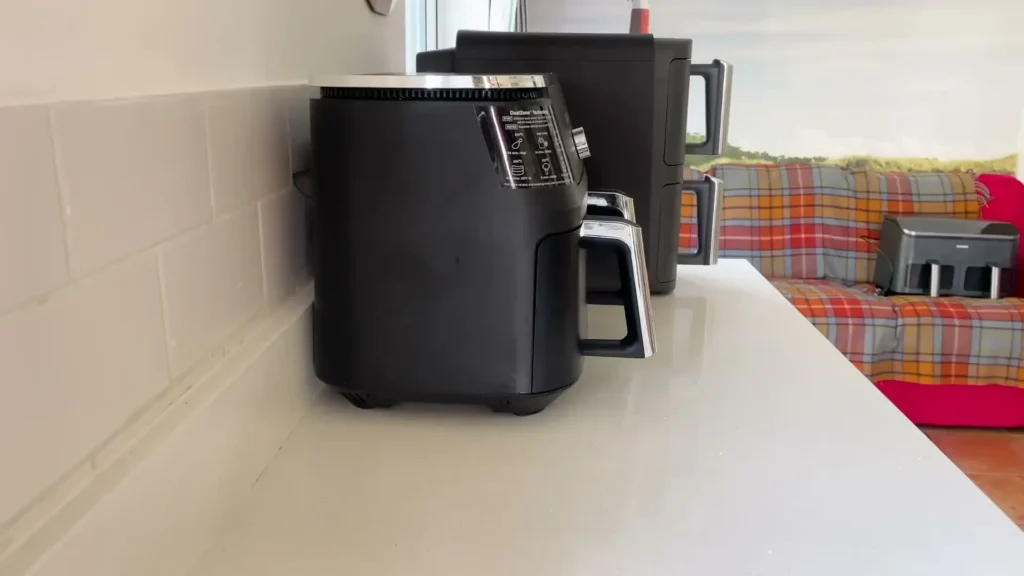
This design also created another challenge. Ninja could not place the hot air outlet vents at the back of the machine, because that would require pulling the air fryer 12cm away from the wall during use, which would leave very little worktop space remaining.
So the hot air outlet is positioned on the right-hand side. This does mean you need to leave clearance to the right of the machine, but because the control panel is already protruding on that side, you only need an additional 6cm of clear space.
The Crisper Plate and Included Racks
The crisper plate on the Ninja Double Stack has been designed to fit into the drawer in two ways. The first is in a low position, similar to the Dual Zone. The second option is to invert the plate and place it higher up in the drawer, which increases airflow beneath it and helps smaller frozen items cook more quickly.
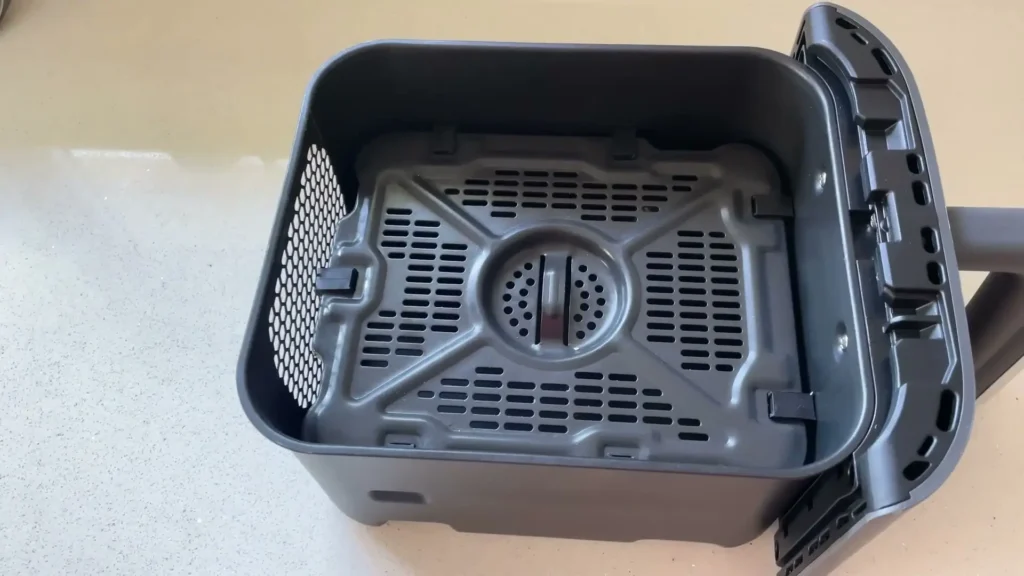
The crisper plates look noticeably different from the Dual Zone versions, featuring extra silicone pieces to protect the drawer. These silicone pieces are removable for washing, so there is nothing to worry about there.
The Double Stack also comes with racks included. Normally I am not a big fan of racks, as third-party designs tend to waste drawer space. These racks, however, have been designed by Ninja and use the available space very well. The drawer itself has a ledge for the racks to rest on, and you insert them with the handles facing upward for easy removal.
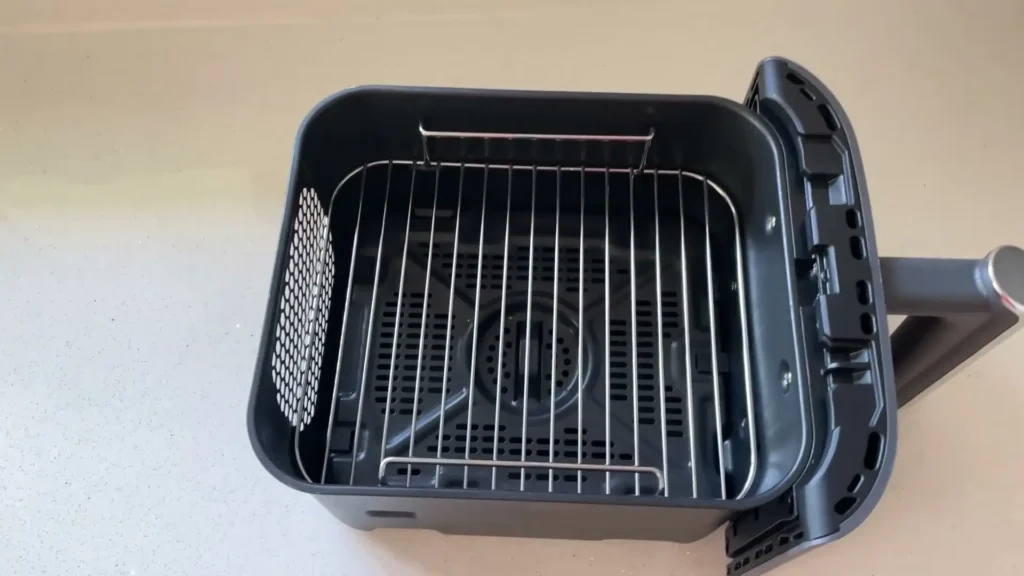
These racks exist for a specific purpose, which is the Double Stack Pro setting. This function, carried over from the Ninja multicooker, allows you to cook vegetables on the bottom layer and fish, meat, or any dish you want to get really crispy on the top half of the rack. You can do this across both drawers simultaneously, with different proteins and sides in each. It is a genuinely brilliant idea and a highly efficient use of the available space.
Also Read: Ninja FlexDrawer Air Fryer Review
Control Panel and Settings
The control panel on the Ninja Double Stack is a little different from other air fryers. There are buttons to select each zone, one for the top and one for the bottom, and you use the dial to choose your setting. Time and temperature can then be adjusted using small buttons above the dial.

Personally, I felt the large dial should double as the start button as it does on the Dual Zone, but on the Double Stack the start button is located at the bottom of the panel. There is also a separate power button, which I always appreciate seeing on an air fryer.
Above those buttons you will find the Sync and Match functions. Sync is used when you are cooking two separate dishes and want them to use a staggered start but finish at the same time. Match is used when you want to programme one drawer and then duplicate those settings to the other drawer. There is also the Double Stack Pro setting, which is the stacked rack cooking function for mains and sides on separate layers.
Side-by-Side Kitchen Tests: Ninja Dual Zone Max vs Double Stack

I tested two roast chickens that were close but not identical in weight. The left-hand chicken weighed 1.4kg and went into the Ninja Double Stack, while the slightly larger 1.5kg chicken went into the Dual Zone.
Both were cooked for 40 minutes on Roast followed by 6 minutes on Max Crisp. Both chickens were cooked through within that time, but the one from the Dual Zone had a slightly higher internal temperature when finished, and the skin had noticeably darker browning.
Toasted Cheese Sandwich
For lunch during testing, I made toasted cheese sandwiches. Since no two sandwiches were exactly the same size, I cut each one in half and placed half in each machine, running both on Air Fry at 200 degrees Celsius. After 6.5 minutes, the Dual Zone sandwich was golden, crunchy, and ready to eat.
The Double Stack sandwich was not. After an extra minute it was closer, but the sandwich at the back of the drawer was still noticeably paler. Placed side by side, the Dual Zone sandwiches had a much browner finish overall.
Sausages and Frozen Chips
I tested both air fryers with six sausages in one drawer and enough frozen chips to cover the bottom of the other drawer without overlapping. The sausages were cooked on Roast and the chips on Air Fry. Halfway through, I gave both drawers a shake. At that point, the sausages at the back of the Ninja Double Stack had very little colour.
After an additional 3 minutes on top of the Dual Zone cooking time and another shake, everything in the Double Stack was evenly cooked. I should mention that by the end of the test there were only four sausages left in the Double Stack drawer. Someone in the household had eaten two of them mid-experiment, and in their defence, they took the two that were most well cooked.
Sponge Cakes
For bakers, I divided an identical batch of cake batter into two tins of the same weight and cooked both on Bake for 20 minutes. Both cakes looked almost identical once done, but the Dual Zone cake had slightly more browning. With an extra minute or two in the Double Stack, the results would likely have been a match.

Frozen Fish Fingers
I cooked fish fingers at 180 degrees Celsius on Air Fry for 8 minutes, following the packet instructions and making sure to shake the drawers several times during cooking, not just back to front but side to side as well so the fish fingers actually flipped over. The finished results were genuinely indistinguishable. Looking at the two plates, I do not think you could identify which fish fingers came from which machine.
Cookies
To test all four drawers cooking simultaneously, my son made a double batch of cookies. The Ninja Double Stack needed a couple of extra minutes compared to the Dual Zone. Looking at the finished cookies on the cooling rack, the Double Stack ones had some paler pieces in the mix, and those were the ones positioned near the back of the drawers.
Addressing the Criticisms
The first criticism I encountered online was that cooking with both drawers running at once significantly increases cooking time on the Ninja Double Stack. The channel where I found this criticism is excellent and is linked in the description. However, that reviewer is based in the United States, where appliances run on 110 volts compared to the 240 volts used in the UK.
Having lived in North America myself, I can confirm that American appliances do run slower than UK equivalents. To be thorough, I tested the theory using bread rolls. I cooked one roll in a single drawer for 11 minutes at 190 degrees Celsius, and then cooked two rolls in separate drawers simultaneously using the same time and temperature. The results were identical. There is no reduction in power when using both drawers on the UK model of the Double Stack.
Is the Cooking Uneven?
The second criticism is that the design of the Ninja Double Stack leads to uneven cooking, with food nearest the fan and heating element at the back browning faster than food at the front. My kitchen tests did show some evidence of this. However, it is worth noting that Ninja advises shaking the drawer three times during a cooking cycle on the Double Stack, compared to once halfway through on the Dual Zone.
Some of the negative comparisons I have seen online have not followed these instructions fully, which I think is a little unfair to the machine. When you shake regularly as instructed, the cooking does even out. This is admittedly trickier with items that need to be turned with tongs rather than shaken, but it is still achievable and is genuinely recommended in the instructions.
Is It Slower Than the Dual Zone?
The third criticism is that the Double Stack is slower to cook than the Dual Zone. Having run the tests myself, I can confirm that yes, it is slightly slower, but the difference is one to two minutes. It is still considerably faster than waiting for a conventional oven to preheat and then cooking in that.
- Designed to fit under kitchen cabinets, ideal for limited worktop space without sacrificing capacity
- Double Stack Pro cooks a main and sides on separate rack layers in the same drawer, genuinely innovative
- Delivers results comparable to larger air fryers with only a marginal time difference, if shaken as instructed
Specifications Table
| Specification | Ninja Double Stack |
|---|---|
| Total Capacity | 9.5 Litres |
| Drawer Dimensions | 250mm x 183mm |
| Drawer Depth | 13cm |
| Unit Height | 37.5cm |
| Depth (inc. handle) | 47cm (up to 52cm with upstands) |
| Heating Element Position | Rear of drawers |
| Control Panel Position | Right-hand side |
| Hot Air Outlet | Right-hand side |
| Included Accessories | Crisper plates, cooking racks |
| Key Settings | Air Fry, Roast, Bake, Max Crisp, Sync, Match, Double Stack Pro |
| Voltage (UK) | 240V |
| Recommended Shake Frequency | 3 times per cook cycle |
Should You Buy the Ninja Double Stack?
The Ninja Double Stack is an appliance built around compromises, and that is entirely intentional. If you are considering it, the chances are you are working with limited worktop space and need an air fryer that can actually fit in your kitchen. If that is your situation, please do not be put off by the negative reviews.
The Double Stack does the job. It has some quirks, but having spent a couple of weeks cooking with it, I can see the thinking behind every design decision Ninja made. They have done the best they possibly could to deliver a full-capacity air fryer in a compact footprint.
The stacked cooking feature, brought over from the Ninja multicooker, is a genuine highlight. The multicooker is a large appliance that most people cannot accommodate in their kitchens, so having that layered cooking functionality available in a more practical unit is a real bonus. If worktop space is your primary concern, the Ninja Double Stack deserves serious consideration.